RescueME Organigraphs
Governance structures can significantly influence the resilience of a cultural landscape,
shaping disaster response and planning practices as well as stakeholder commitment.
Four governance typologies – i.e. different archetypical forms of governance present in cultural heritage sites – were distilled: Hierarchical Governance, Participatory and Collaborative Governance,
Multi-level Governance, as well as Networking and Community-led Governance. While these
four governance typologies do not consider the historic, social, economic, and
environmental variables within each unique cultural heritage site, they can serve as
blueprints, providing experts with starting points to explore the governance and attempt to
shape it according to their unique situation.
The four governance typologies are mapped using the ‘standardised key’ defined by Durrant et al., 2021 and are described below:
Hierarchical Governance
The key defining feature of Hierarchical Governance is that the power within governance structures is held at a higher spatial scale. Most commonly, the power is held by the national government and the different ministries or departments that act on behalf of that government. The decision-making process within Hierarchical Governance filters from a higher spatial scale. Within strict Hierarchical Governance typologies, policy instruments are developed by the national government and its ministries. These policy instruments are interpreted and implemented by regional stakeholders and
ultimately followed by local stakeholders.
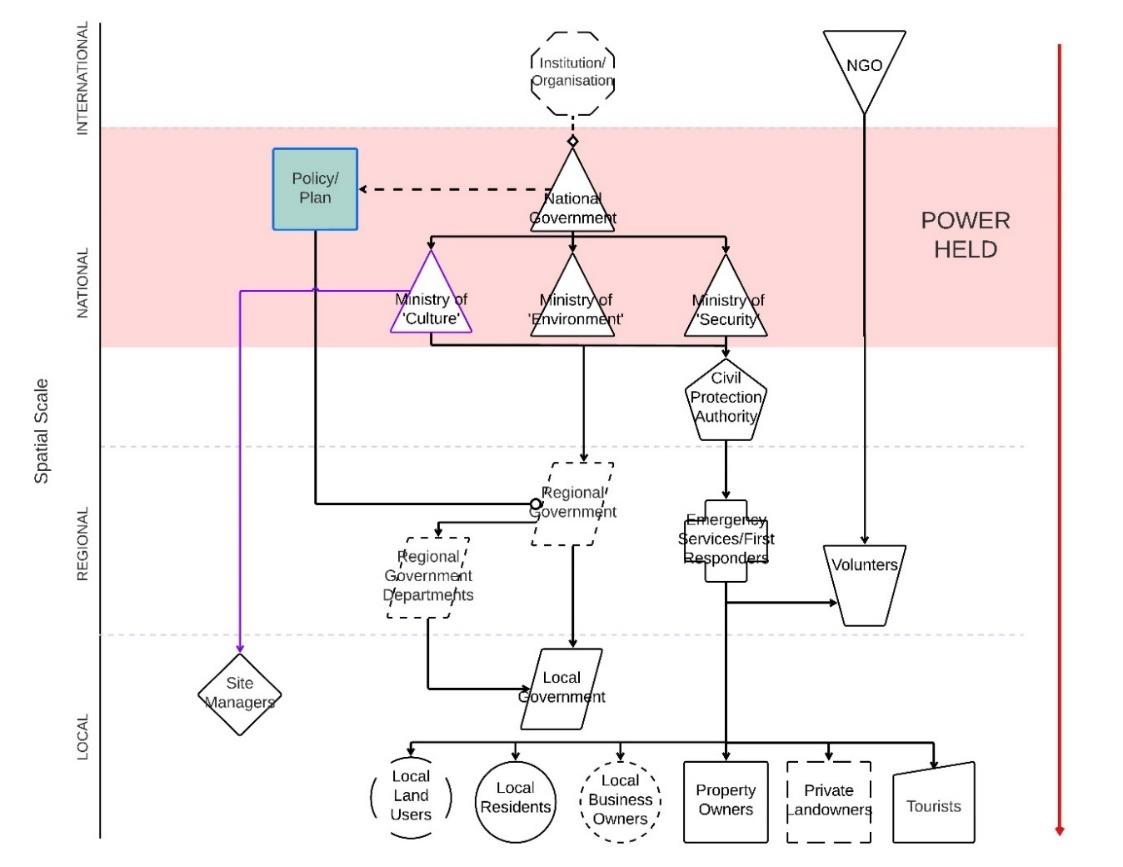
Practical Model of Hierarchical Governance
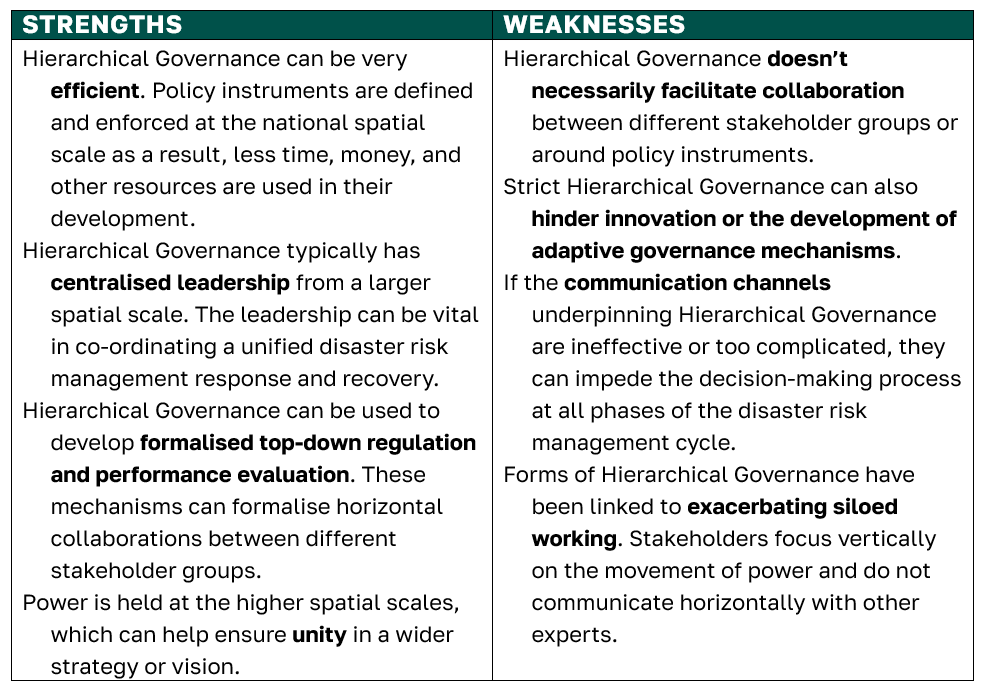
Strengths and weaknesses of hierarchical governance
PARTICIPATORY AND COLLABORATIVE GOVERNANCE
Participatory and Collaborative Governance typologies describe a form of governance in
which one stakeholder group does not hold the power (Figure 32). Instead, this is a governance typology in which the power is held in a collaborative governance mechanism. By way of example, a workshop, committee, commission, or expert group meeting.
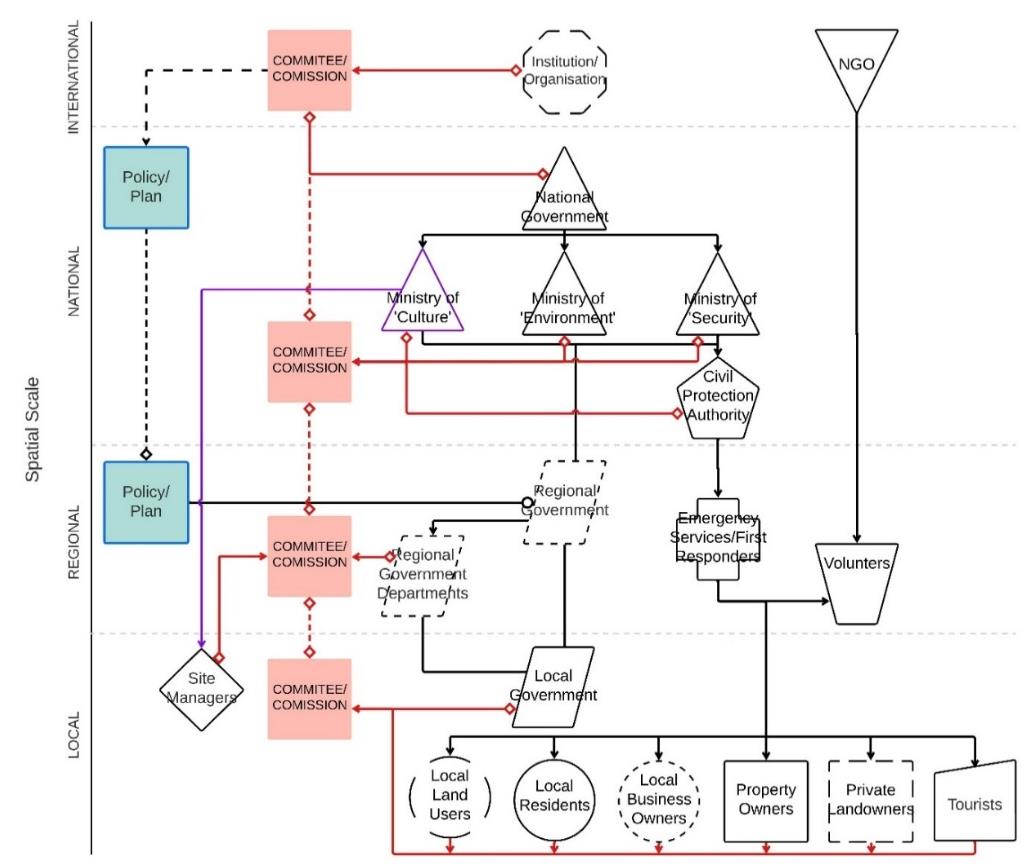
Practical Model of Participatory and collaborative Governance
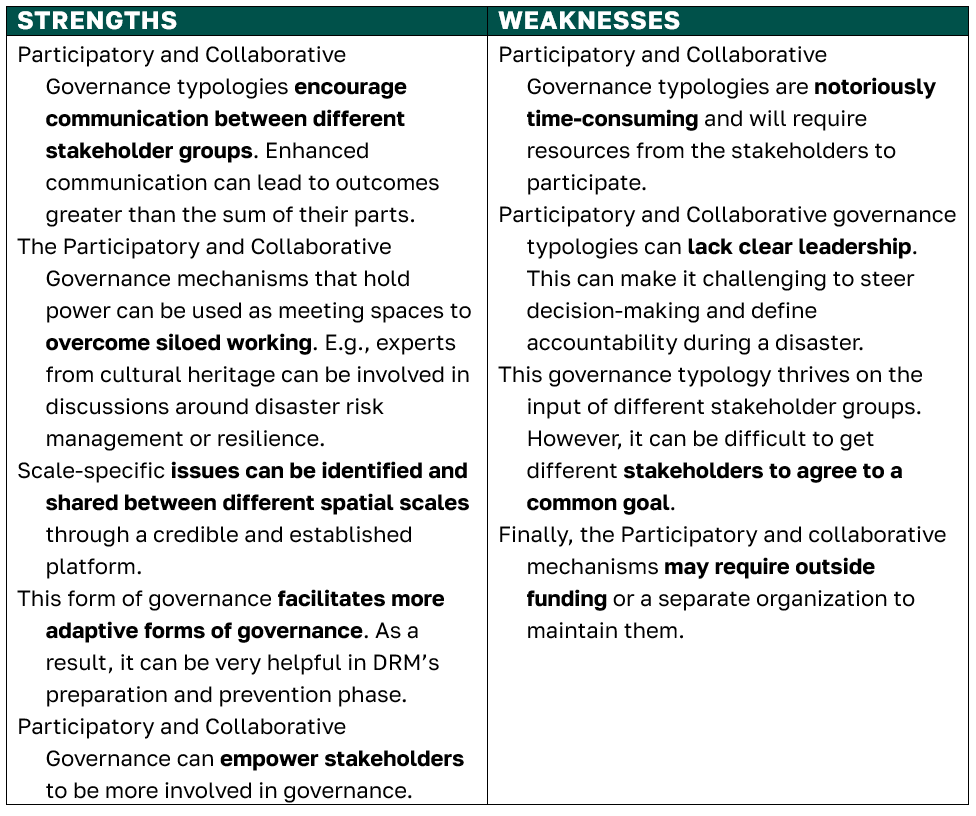
Strengths and weaknesses of participatory governance
MULTI-LEVEL GOVERNANCE
The next governance typology is referred to as Multi-level Governance. Multi-level Governance describes a type of governance in which one stakeholder is not the centralised node of power, but instead, the power is distributed across multiple scales of governance. The different centers of power act as independent nodes within a governance structure.
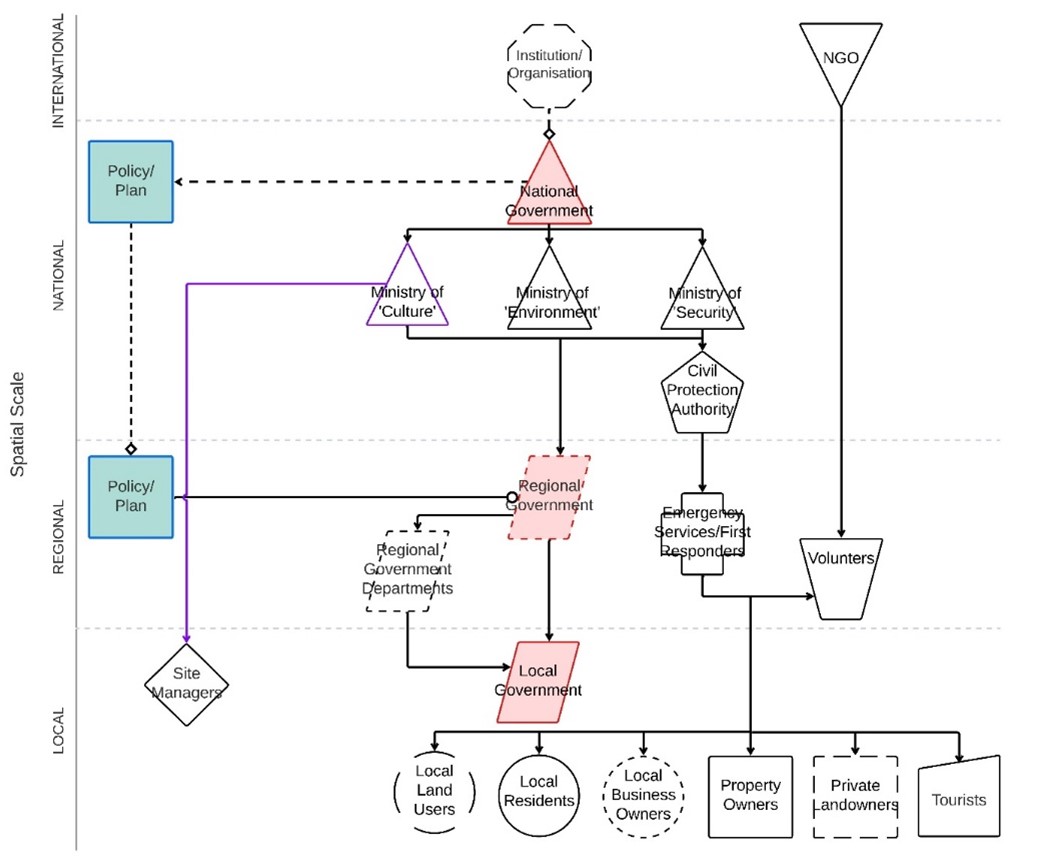
A Practical Model of Multi-Level Governance
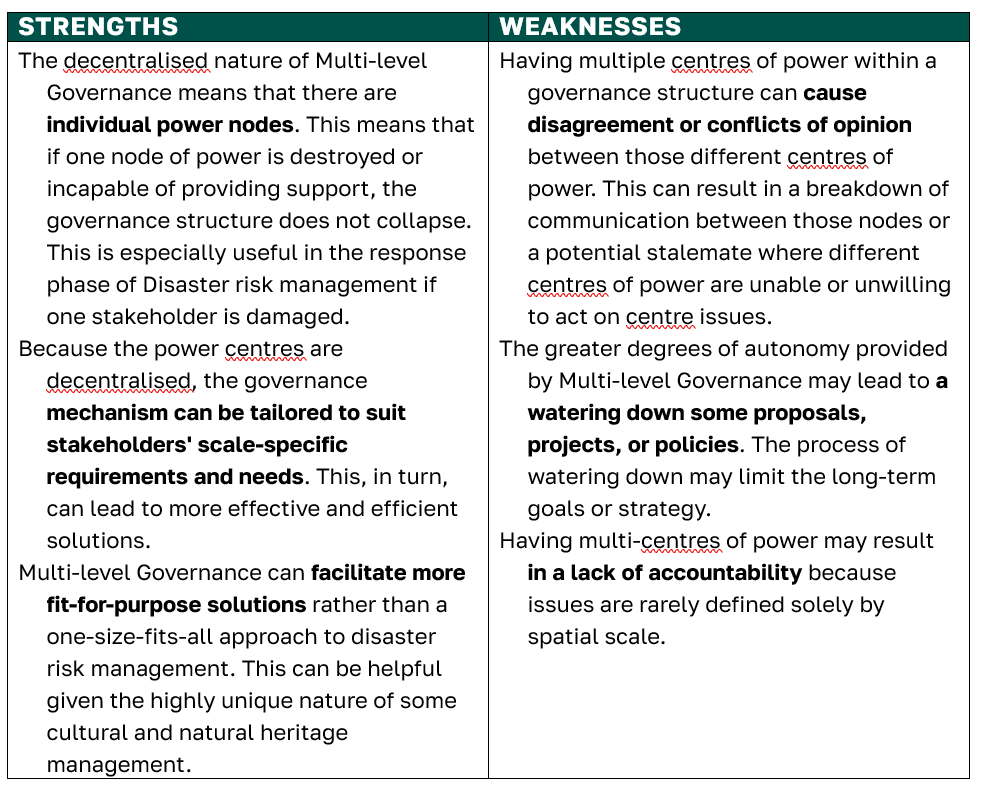
Strengths and weaknesses of multi-level governance
COMMUNITY-LED GOVERNANCE
The final governance typology is called Community-led Governance. In this governance typology, the local stakeholder groups hold the power at the local spatial scale. Including but not limited to residents, local businesses, and neighbourhood groups. With this governance typology, the governance structures depend upon the perceptions, experience, and contributions of the local stakeholder groups. This typology is traditionally defined as bottom-up form of governance. Within this typology, the local community groups take a passive role in developing policy solutions. The local communities contribute through participatory governance approaches. Alternatively, the local spatial scale stakeholders take a more active role in the governance. By way of example, the local community group becomes frustrated with the response of other stakeholders and takes responsibility and
power for themselves.
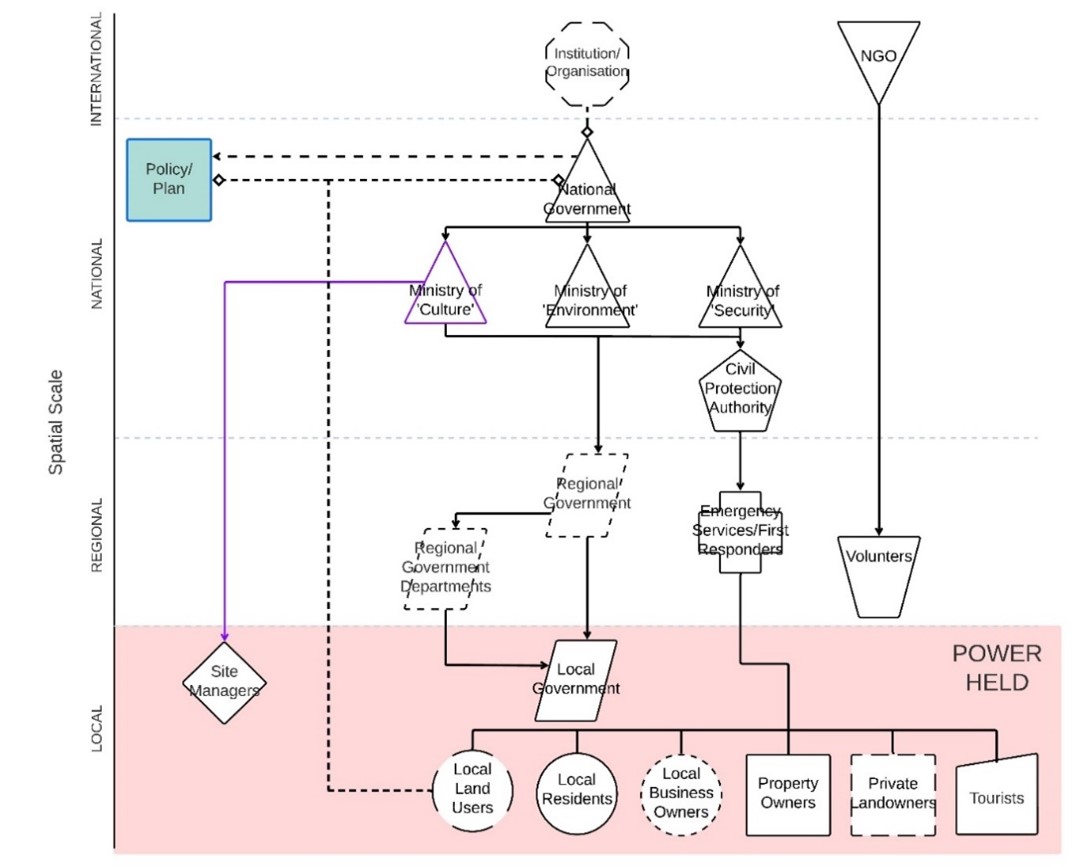
A Practical Model of Networking and Community-led Governance
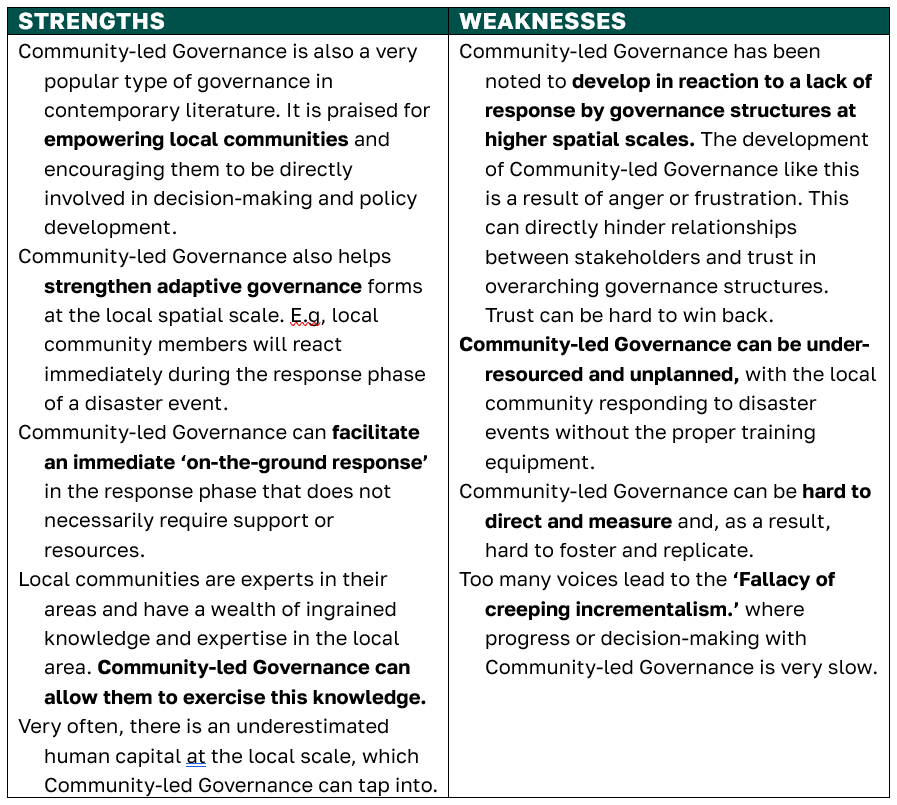
Strengths and weaknesses of community-led governance
Reference
Durrant et al., (2021). Using Organigraphs to Map Disaster Risk Management Governance in the Field of Cultural Heritage. Sustainability MDPI. 14(2), 1002; https://doi.org/10.3390/su14021002