RescueME Stakeholder Registry
What is a stakeholder registry?
A stakeholder registry is a guided map or list of key actors relevant to the objectives of each R-Labs (the RescueME case studies), which serves as a useful tool for the R-Lab coordinators to track stakeholders and monitor their engagement across various co-creation processes and project activities.
The stakeholder registry includes a wide range of actors, such as local government policymakers, research institutions, civil society organisations, local population groups, local industries and media collaborators. Stakeholders may also be involved on different levels. The picture below shows the local, regional, national and international scales in the city of Zadar (HR), one of the R-Labs.
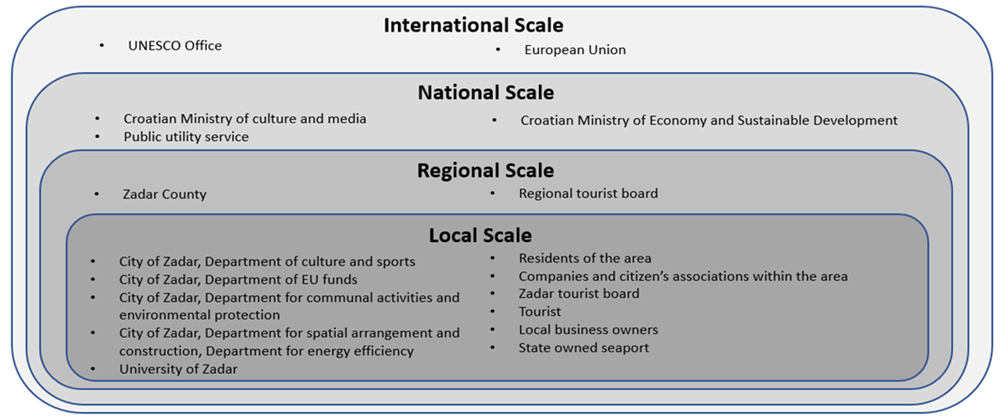
Figure 1: Stakeholders at different scales for the RescueME pilot site in Zadar (HR)
In RescueME, the stakeholder registry supported the preparation of and the engagement in a wide range of co-creation activities. These included workshops such as Impact Chain Workshops, Baseline Assessment Survey, Baseline Assessment Focus Group, and the creation of an Organigraph, among others. The first Tab of the attached ‘Stakeholder Registry Mockup’ serves the purpose of tracking the participation in these kinds of activities, both held online or in-person. The Tabs 2-6, instead, help identify potential stakeholders to be invited to project activities. Each of these Tabs represents a different cluster of stakeholders: government and public institutions, civil society and NGOs, academia, industries and private actors, media outlets. Note: the proposed selection of target groups is meant specifically for the RescueME project but could serve as a basis for expanding. Specific information, such as the details of the stakeholders (name, emails, etc.) are not always required and must be collected only in compliance with GDPR and current privacy regulations.
By maintaining and regularly updating the stakeholder registry, site coordinators can ensure a structured approach to collaboration, identify opportunities for co-creation, and track the effectiveness of engagement strategies. In this way, the registry becomes an essential tool for fostering inclusive, multi-sectoral partnerships that support RescueME (and your project) objectives and long-term community resilience.
How can a stakeholder registry support your work?
A stakeholder registry can support your work in several ways, especially in projects where multi-sectoral collaboration is key:
- Stakeholder Identification: It provides a structured overview of all relevant actors, from policymakers to local communities, research institutions or local industries. This ensures no important stakeholders are overlooked or dismissed.
- Engagement Tracking: The registry allows you to monitor how each stakeholder is involved in co-creation activities, workshops and events organised around the project. This helps measure participation and identify gaps.
- Targeted Communication: By knowing who each stakeholder is, you can tailor communication, invitations, and information sharing to maximize knowledge exchange and enhance collaboration.
- Strategic Planning: Understanding the relationships and roles of different stakeholders helps in planning collaboration strategies, aligning project goals with local needs and offering partnerships.
- Documentation and Reporting: A well-maintained registry provides a clear record of who was engaged, when, and how, supporting transparency and accountability for project management and reporting purposes.
- Sustainability and Legacy: Beyond the immediate project, the registry becomes a resource for future initiatives, enabling ongoing collaboration with established networks and stakeholders.
In short, a stakeholder registry turns a complex web of actors into a manageable and actionable tool, making your co-creation and dissemination efforts more effective and inclusive.